The announcement of a new Pay Commission is always a major event for government employees and pensioners in India. With the 8th Central Pay Commission (CPC) expected to come into effect from January 1, 2026, attention has shifted to one crucial figure that decides how salaries and pensions will change, the fitment factor.
For pensioners, the fitment factor is especially important because it determines how their existing pension will be revised under the new pay structure. Even a small variation in this multiplier can result in thousands of rupees of difference each month, making it a topic of high anticipation and debate.
In this article, we’ll explain what the fitment factor is, how it has worked in previous pay commissions, its likely impact in the 8th CPC, and what pensioners can expect in the coming years.
What is the Fitment Factor?
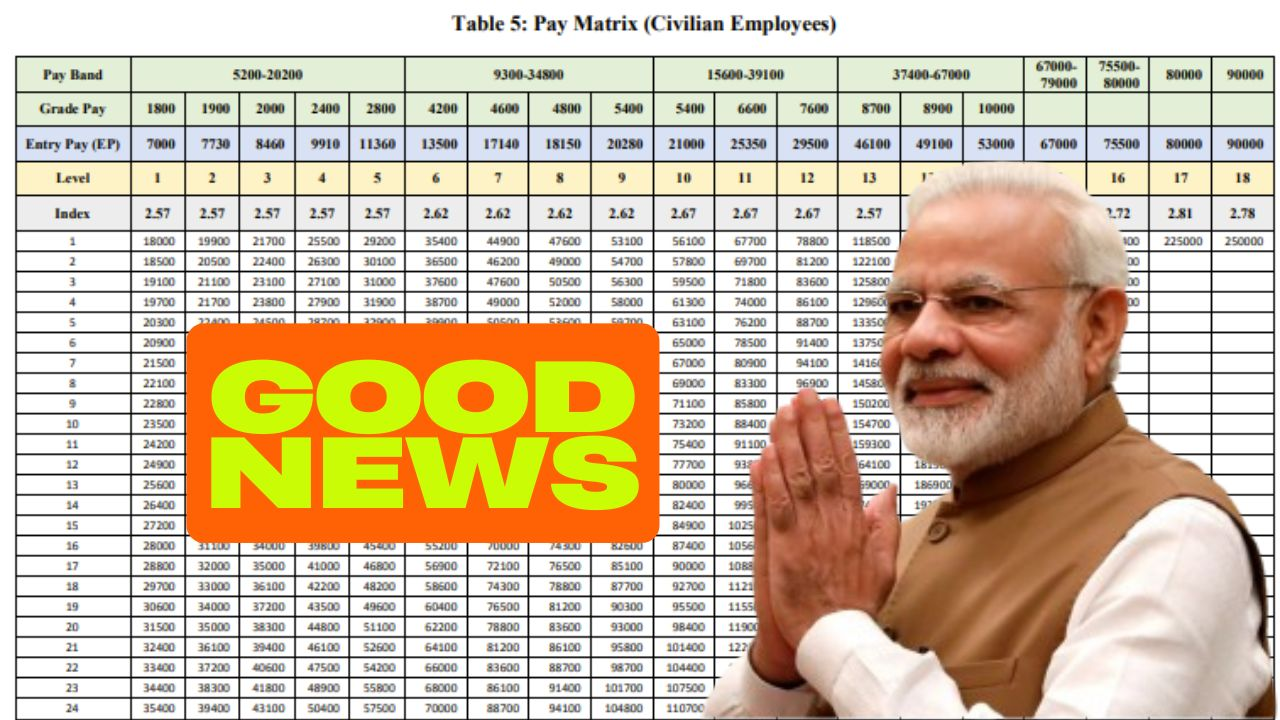
The fitment factor is a multiplier applied to the existing basic pay or pension to revise it under a new pay commission. It ensures a uniform increase across all levels of government employees and pensioners.
For example, if the fitment factor is 2.57 (as in the 7th CPC) and your current basic pension is ₹20,000, your revised pension becomes:
₹20,000 × 2.57 = ₹51,400
This revised pension then becomes the base on which allowances such as Dearness Allowance (DA) are calculated.
Why the Fitment Factor Matters for Pensioners?
For pensioners, the fitment factor directly influences monthly income and retirement security. Here’s why it matters:
- Higher Monthly Pension: A higher multiplier leads to an immediate increase in pension.
- Increased Allowances: Dearness Allowance, which is a percentage of the basic, will also rise accordingly.
- Impact on Family Pension: Family pensions are revised in the same way, benefiting dependents.
- Arrears Payment: If the implementation is delayed, pensioners will receive arrears for the pending months.
Thus, even a difference of 0.20 or 0.30 in the fitment factor can add up to a significant amount annually.
Expected Fitment Factor in the 8th Pay Commission
While the government has not officially announced the 8th CPC fitment factor, various reports and employee union demands suggest it may fall between 2.28 and 3.68.
- At 2.28 – Conservative scenario, moderate rise in pensions.
- At 2.57 – Same as the 7th CPC, maintaining the current multiplier.
- At 3.0 or above – A stronger revision, significantly boosting salaries and pensions.
For instance:
- Current Pension = ₹30,000
- If Fitment Factor = 2.57 – ₹77,100
- If Fitment Factor = 3.0 – ₹90,000
- If Fitment Factor = 3.68 – ₹1,10,400
This shows how the fitment factor range can impact pensioners differently.
Factors Influencing the 8th CPC Fitment Factor
The Pay Commission does not choose the multiplier arbitrarily. It takes into account several economic and administrative considerations:
- Inflation Trends: Rising consumer prices and cost of living adjustments.
- Parity with the Private Sector: To keep government jobs competitive.
- Employee Union Demands: Strong influence from federations advocating higher pay.
- Government Budget Constraints: The Finance Ministry ensures revisions are fiscally sustainable.
- Past Precedents: Earlier commissions usually guide the range of possible multipliers.
Minimum Pension Under the 8th CPC
Under the 7th CPC, the minimum pension was set at ₹9,000 per month. With inflation and cost-of-living increases over the past decade, the 8th CPC is expected to raise the minimum pension to around ₹13,000–₹15,000 per month. This would provide much-needed relief to pensioners in the lower pay bands, ensuring a basic standard of living.
Pension Arrears and Implementation Timeline
If the 8th Pay Commission is implemented from January 1, 2026, but notifications are issued later (as seen in previous CPCs), pensioners may receive arrears for the delay period.
For example, if the notification comes in mid-2027, pensioners could get lump-sum arrears for 12–18 months, providing significant financial relief.
What Pensioners Should Do Now?
While waiting for official announcements, pensioners can prepare in the following ways:
- Estimate Future Pension: Calculate revised pension using different fitment factors.
- Plan Financially: Adjust EMIs, healthcare, and retirement expenses based on expected increase.
- Stay Updated: Follow government notifications from the Ministry of Finance and Pay Commission updates.
- Avoid Misinformation: Only rely on credible sources for CPC news.
Conclusion
The 8th Pay Commission fitment factor is set to reshape the financial outlook of lakhs of pensioners across India. While the exact multiplier will only be confirmed once the commission submits its report, the expected range of 2.28–3.68 suggests a significant rise in pensions. For pensioners, this isn’t just about numbers, it’s about security, stability, and the ability to cope with rising costs in retirement. Staying informed and preparing financially ahead of time will ensure that pensioners can make the most of the opportunities presented by the upcoming pay revision.