The 8th Pay Commission has become one of the most discussed topics among central government employees and pensioners. With its implementation expected from 1st January 2026, it is projected to bring a significant change in the salary structure, allowances, and pension benefits of nearly 50 lakh central government employees and over 60 lakh pensioners across India.
A major highlight of every Pay Commission is the fitment factor, which directly determines the hike in basic salaries. Employees are eager to know what fitment factor they can expect under the 8th Pay Commission and how it will affect their take-home pay. Let’s explore this in detail.
What is the 8th Pay Commission?
The Pay Commission is set up by the Government of India once every 10 years to revise the pay structure, allowances, and pensions of central government employees. The 7th Pay Commission, implemented in 2016, introduced the pay matrix system that replaced the grade pay structure.
Now, the 8th Pay Commission is expected to continue this reform by recommending revised salary slabs, updating allowances like DA, HRA, TA, and recalibrating pensions. This revision is crucial to align employee salaries with rising inflation and changing economic conditions.
8th Pay Commission Implementation Date
The government has announced that the 8th Pay Commission will come into effect on 1st January 2026. Historically, Pay Commissions are implemented every 10 years, and the timeline aligns with this pattern.
8th Pay Commission Salary Structure
The salary structure under the 8th CPC will be revised based on the fitment factor. Here’s how it works:
- Basic Pay: Current basic salary × Fitment Factor = New Basic Salary.
- Allowances: DA, HRA, TA, and other allowances will be recalculated on the updated basic pay.
- Gross Salary: Total of basic pay + allowances.
This structure ensures employees see a direct and transparent increase in their take-home salary.
What Salary Hike Can Employees Expect?
The 8th Pay Commission is expected to bring a salary hike between 30–34%, depending on the final fitment factor approved. However, there’s an important detail, Dearness Allowance (DA), which currently stands at 55% of basic pay, will be reset to zero when the new commission is implemented. This means while the basic salary may rise significantly, the effective hike will balance out due to the DA reset.
8th Pay Commission Fitment Factor – What to Expect?
The fitment factor is the most awaited recommendation in every Pay Commission. It is expected to range between 1.83 and 2.46 in the 8th CPC.
- Fitment Factor 1.83: Offers moderate hikes, aligned with inflation adjustments.
- Fitment Factor 2.46: Provides a substantial jump, ensuring better purchasing power for employees.
If the government decides on the higher end, employees could see nearly double their current salaries.
Salary Hike Comparison: 7th CPC vs 8th CPC
The table below shows how salaries may increase with different fitment factors:
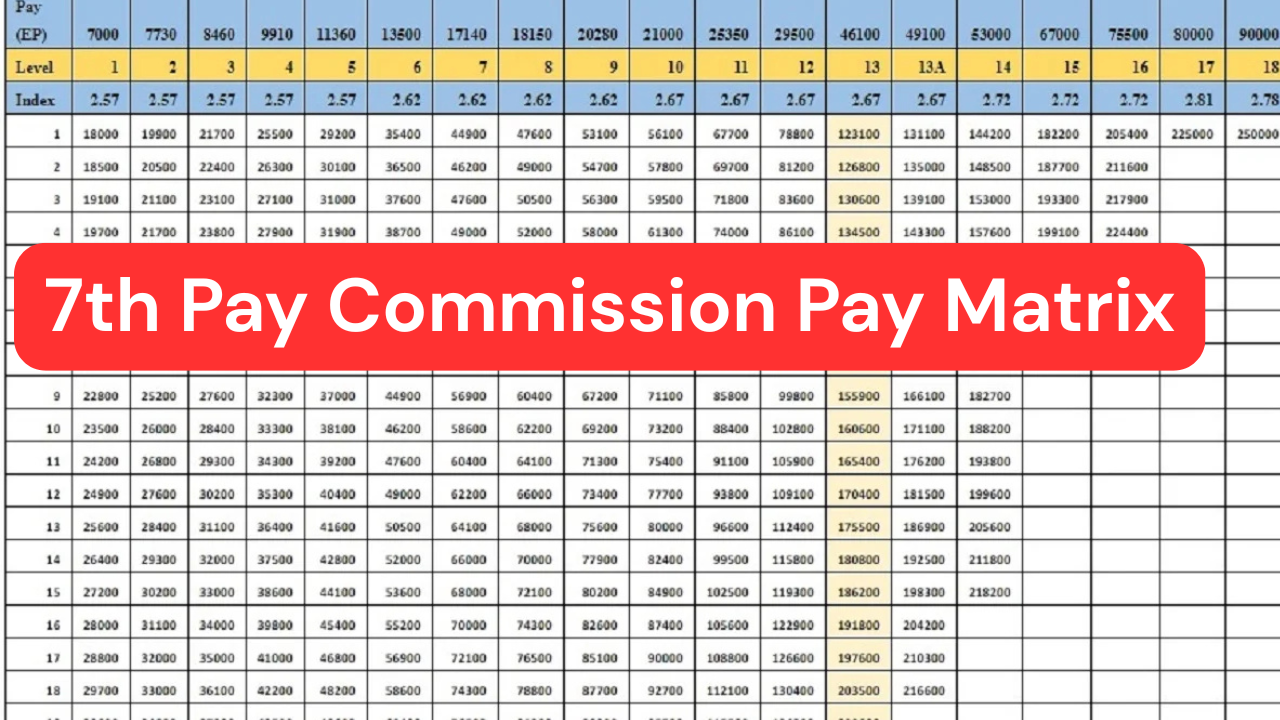
| Pay Matrix Level | 7th CPC Basic Salary | 8th CPC (1.83 Factor) | 8th CPC (2.46 Factor) |
| Level 1 | ₹18,000 | ₹32,940 | ₹44,280 |
| Level 6 | ₹35,400 | ₹64,872 | ₹87,084 |
| Level 10 | ₹56,100 | ₹1,02,423 | ₹1,37,826 |
| Level 13 | ₹1,23,100 | ₹2,25,473 | ₹3,02,226 |
| Level 18 | ₹2,50,000 | ₹4,57,500 | ₹6,15,000 |
This comparison shows how higher-level officers may cross ₹6 lakh per month in basic pay with the higher fitment factor.
Delay in Terms of Reference (ToR)
For a Pay Commission to function, the Terms of Reference (ToR) must be finalized by the government. While the 8th Pay Commission was announced on 16 January 2025, its ToR is yet to be notified, leading to delays. Historically, previous Pay Commissions also faced delays between announcement and formal notification. For example:
- 7th Pay Commission: Announced in September 2013, ToR issued in February 2014 (5-month delay).
- 8th Pay Commission: Already crossed 200+ days delay since announcement.
8th Pay Commission Salary Calculator
A salary calculator for the 8th CPC will help employees and pensioners estimate their revised pay. It will factor in:
- Current basic salary
- Proposed fitment factor
- Reset DA percentage
- HRA classification (metro, urban, rural)
Such tools will be useful for government staff to get a quick projection of their likely salary hike.
What About Pensioners?
The 8th Pay Commission will also bring relief for pensioners. Their pension is directly linked to the basic pay, so the fitment factor will also apply to them. This means pensioners can expect their monthly pension to increase by 30–34% as well.
Conclusion
The 8th Pay Commission is poised to bring a major transformation in the salary and pension structure of central government employees. The most crucial element, the fitment factor, is expected between 1.83 and 2.46, which could translate into a 30–34% hike in salaries.
While delays in finalizing the Terms of Reference have created some uncertainty, employees and pensioners remain hopeful that the government will deliver a fair and inflation-adjusted pay revision. Once implemented in January 2026, the 8th Pay Commission will not only increase financial security for lakhs of government workers but also boost overall demand in the Indian economy.