EPF Withdrawal Rules: The Employees’ Provident Fund Organisation (EPFO), which administers the compulsory retirement-savings scheme for millions of salaried workers in India, has introduced a landmark set of reforms in 2025 aimed at making provident fund access simpler, more flexible and more aligned with today’s financial realities. These changes strike a balance between facilitating earlier access during life-events, and preserving the core retirement purpose of the fund. In this article, we analyse the key reforms, their implications, practical takeaways for members, and important cautions to consider.
Background: Why Reform Was Needed
Historically, the EPF (Employees’ Provident Fund) scheme set fairly rigid eligibility criteria for withdrawal—both partial and final. For example:
- Partial withdrawals for housing, education or marriage involved multiple overlapping rules, years of service requirements, and documentation.
- Full withdrawal was largely possible only on retirement (age 55/58 depending) or specific conditions such as unemployment for stipulated periods.
- Many subscribers found the process cumbersome: employer approvals, fragmented rules, long wait periods, as well as weaker digital integration.
Given these constraints, the reforms aim to modernise the EPFO withdrawal regime, to make it more responsive to members’ life-events (illness, housing, job changes) while still guarding the long-term retirement corpus.
Key Highlights of the 2025 Reforms
Here are the most significant changes introduced:
1. Up to 100% Withdrawal of Eligible Balance
One of the most attention-grabbing reforms is that members can now withdraw up to 100 % of their “eligible balance”, including both employee and employer contributions (plus interest) under appropriate conditions.
However, several caveats apply — including minimum balance preservation.
2. Simplification: Merging 13 Provisions into 3 Categories
The EPFO has merged a complex web of 13 separate partial withdrawal provisions into just three broad categories:
- Essential Needs (e.g., illness, education, marriage)
- Housing Needs
- Special Circumstances (e.g., calamity, unemployment)
This reduction in complexity improves clarity for members.
3. Lower Minimum Service Requirement & Higher Frequency
- The minimum service period for partial withdrawal has been uniformly reduced to 12 months for all categories.
- The number of times a member can withdraw for certain purposes has been increased: e.g., up to 10 times for education, up to 5 times for marriage.
4. Housing Withdrawal: Easier & Earlier
Under the newly introduced Paragraph 68-BD of the EPF Scheme, 1952, members can now withdraw up to 90% of their corpus for housing needs (purchase, construction, EMI repayment) after just 3 years of service (down from 5). www.ndtv.com+1
5. Digital & Automation Improvements (EPFO 3.0)
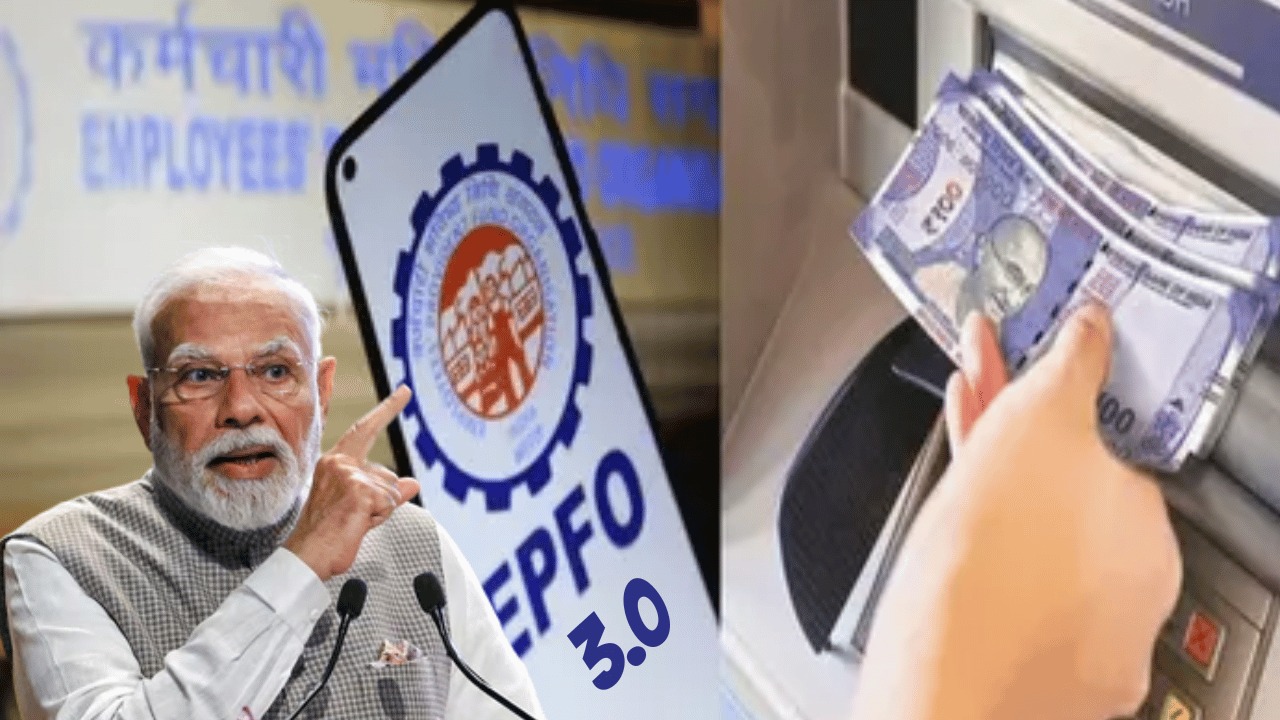
A major digital revamp — often termed “EPFO 3.0” — is being implemented, which will enable features such as:
- Instant withdrawals via UPI/ATM.
- Auto-settlement of claims up to higher limits (e.g., auto-settlement raised to ₹5 lakh).
- Easier PF transfers, reduced employer approvals (from Jan 2025).
6. Final Settlement & Unemployment Rules Revised
- The waiting period for full PF settlement (on unemployment) has been extended to 12 months unemployed (instead of 2 months).
- Pension withdrawal under the EPS now triggers only after 36 months unemployed.
7. Minimum Balance Retention Requirement
To preserve retirement-security, the reforms require that at least 25% of the total corpus must remain in the account when partial withdrawals are made.
Implications for EPF Members
Advantages
- Greater flexibility: Members now have wider access to their savings for meaningful life-goals — housing, education, emergencies.
- Quicker access: Digital claims, auto-settlements, shorter service criteria make the system far more responsive.
- Simplified rules: Fewer conditions to understand, easier eligibility.
- Better alignment with modern career patterns: In a world of job-hopping, earlier partial withdrawals and simpler transfers are welcome.
Things to Watch
- Retirement corpus risk: With full withdrawals (or near full) possible, members must still discipline themselves to retain savings for old age. The 25% minimum balance rule helps, but behavioural risks remain.
- Interest and timing: Although rules permit earlier withdrawal, the corpus continues to earn interest (currently ~8.25 % for EPF). Premature withdrawal may sacrifice long-term compounding.
- Eligibility details matter: The “eligible balance” for 100% withdrawal etc will have specific definitions and conditions which members must verify.
- Final settlement rules tightened for unemployment: The extension to 12 months (from 2 months) means unemployed members cannot rush to draw full corpus and must plan accordingly.
- Behavioural temptation: Easy access may lead to using EPF funds for non-essential consumption rather than emergent needs or saving.
Practical Guidance: What You Should Do
- Check your UAN-linked KYC: To avail digital facilities (UPI/ATM/auto-settlement), ensure your Aadhaar, bank account, mobile number are seeded.
- Track your EPF passbook: Use the online portal/app to know your accumulated corpus, employer contribution, interest credited.
- Use withdrawal options strategically:
- For housing needs, evaluate whether you’re eligible under Para 68-BD (3 years service, property conditions).
- For other needs (education, marriage, illness), check how many withdrawals you’ve already made (now higher limits apply).
- Keep retirement savings intact: Even if you are tempted to withdraw fully, maintain the required minimum balance and ensure your long-term financial goals (post-retirement) aren’t jeopardised.
- Plan for unemployment contingencies: If you lose job, know the rules for settlement (12 months), so you arrange alternative finances.
- Stay updated on rollout: Some features (e.g., ATM/UPI withdrawals) under EPFO 3.0 are being rolled out; check with EPFO for timeline in your region.
Remaining Questions and Areas to Clarify
- Effective dates & notification timelines: While many reforms have been approved (e.g., in the CBT meeting), full implementation for all features may phase-in.
- Definition of “eligible balance”: Despite headlines of 100% withdrawal, full access is subject to conditions (minimum balance, service etc).
- Treatment of employer contributions vs employee contributions: Historically employer share had separate treatment; under the new rules both are included but details matter.
- Tax implications: Withdrawal before retirement might have tax implications (for certain components) – members should consult tax experts.
- Impact on pension benefits: With more withdrawals, one must check how that affects the EPS (Employees’ Pension Scheme) component and long-term pension eligibility.
Conclusion
The 2025 reforms to the EPF withdrawal regime represent one of the most significant overhauls of the Employees’ Provident Fund Organisation framework in recent years. By offering greater flexibility, simpler rules and faster access, they respond to the evolving needs of India’s salaried workforce. At the same time, by embedding mechanisms like the 25% minimum balance, longer unemployment settlement periods and standardised service criteria, the reforms endeavour to safeguard the retirement corpus.
For the individual member, the key is balanced use: the reforms open up exciting possibilities (housing, education, emergencies), but smart financial planning is still crucial so that today’s convenience does not come at the cost of tomorrow’s security.
FAQs
1. What are the new EPF withdrawal rules introduced in 2025?
In 2025, the Employees’ Provident Fund Organisation (EPFO) simplified its withdrawal system by merging 13 complex provisions into 3 main categories — Essential Needs, Housing Needs, and Special Circumstances. Members can now withdraw up to 100% of their eligible balance under specific conditions, make withdrawals more frequently, and access funds faster through the EPFO 3.0 digital platform using UPI and automated claim settlements.
2. Can I withdraw my full EPF balance before retirement?
Yes, under the 2025 reforms, employees can withdraw up to 100% of their eligible EPF balance in certain cases like permanent disability, long-term unemployment (after 12 months), or specific housing requirements. However, at least 25% of the corpus must remain in the account to ensure retirement savings are protected.
3. What is the minimum service period required for partial EPF withdrawal now?
The minimum service requirement for partial withdrawal has been reduced to 12 months across all categories. Earlier, the rules varied depending on the reason for withdrawal (e.g., 5 years for housing). This uniform rule makes the process easier and more accessible for employees.
4. Can EPF withdrawals be made digitally?
Yes. The new EPFO 3.0 system allows members to withdraw funds digitally through the EPFO portal and mobile app. Upcoming features like UPI and ATM-based instant withdrawals are also being rolled out, making the process faster and more transparent. Auto-settlement of claims up to ₹5 lakh has also been introduced.
5. Are there any tax implications for early EPF withdrawal?
Yes. If you withdraw your EPF balance before completing 5 years of continuous service, the amount may be taxable under the Income Tax Act. The withdrawal amount will be added to your income, and TDS may apply if the withdrawal exceeds ₹50,000. It’s advisable to consult a tax expert before making early withdrawals to understand the financial impact.